A Manchu Conquest Becomes a Chinese Dynasty
The Qing began outside China entirely — as the state of the Manchus, a people from the northeast who had unified under a military and administrative system called the Eight Banners. When the Ming dynasty collapsed amid rebellion in 1644, Manchu forces took the opportunity to seize Beijing, and over the following decades extended Qing control over the rest of China. As with the Mongol Yuan before them, a non-Han people now ruled China — but the Qing went further than the Yuan in adopting Chinese institutions, language, and Confucian governance, while maintaining a distinct Manchu identity at court (including, famously, the requirement that Han Chinese men adopt the Manchu queue hairstyle).
The Qianlong Era: An Empire at Its Height
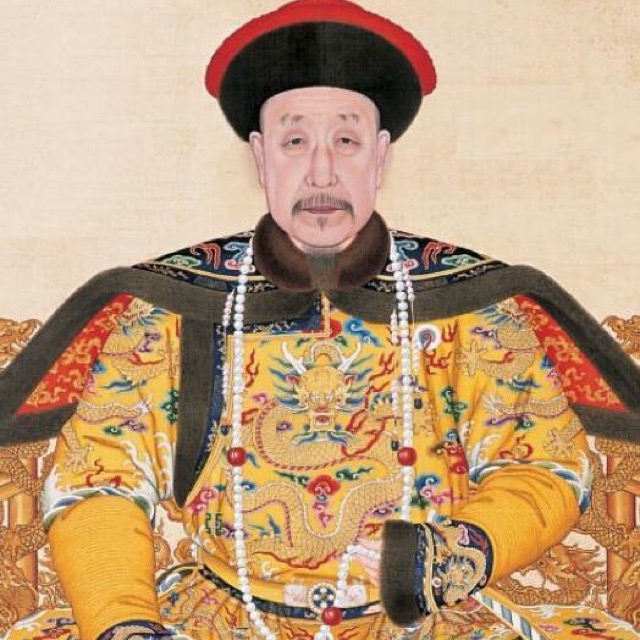
Under the Kangxi, Yongzheng, and especially Qianlong emperors during the 17th and 18th centuries, the Qing reached its territorial and cultural peak — its borders expanded to roughly the shape of modern China (and beyond), the population boomed, and the court sponsored enormous cultural projects, including one of the largest encyclopedic collections ever assembled. The Qianlong Emperor, pictured here, reigned for over 60 years and became a near-mythical figure — a favorite subject of the costume dramas set in this period, which often dramatize his court, his consorts, and the women who served there.
Decline, the Opium Wars, and the End of Empire
The 19th century was far less kind to the Qing. Population pressure, corruption, and a series of devastating rebellions weakened the state from within, while the Opium Wars with Britain (and later other foreign powers) forced China into unequal treaties, foreign concessions, and a loss of control over its own ports and tariffs. The dynasty limped into the 20th century before the 1911 Revolution brought it to an end — the last emperor, Puyi, abdicated in 1912 as a child, closing out more than two thousand years of imperial rule in China.
The Qianlong-era court — its concubines, politics, and palace hierarchy — is the setting for Story of Yanxi Palace and similar dramas, which take the real historical figures mentioned above and dramatize the rivalries of the inner court.
That's the timeline — start to finish
Revisit the full dynasty timeline, or explore a drama set in the Qing court.