From Peasant Rebel to Emperor
When the Qin dynasty collapsed into rebellion, the man who came out on top wasn't a noble — he was Liu Bang, a commoner who rose through the chaos to found the Han dynasty in 206 BCE. The Han kept much of the Qin's centralized administrative structure but governed with a far gentler hand, easing the harsh Legalist punishments and adopting Confucian ideas about virtuous rule. The result was four centuries of dynasty (with a brief interruption) that Chinese people still look back on as a founding golden age — so much so that the majority ethnic group in China calls itself "Han," and Chinese characters are still called "Han characters" (汉字) today.
The Silk Road and an Expanding World
Under Emperor Wu (Han Wudi), the Han pushed its borders west into Central Asia, opening and protecting the trade routes that would become known as the Silk Road. Silk, paper, and ceramics flowed west; horses, glass, and new crops flowed east, along with ideas — Buddhism entered China along these same routes during the Han period. Diplomatic missions, like that of the explorer Zhang Qian, mapped out kingdoms the Chinese court had never had direct contact with before, fundamentally expanding China's sense of the world beyond its borders.
Confucianism Becomes Official
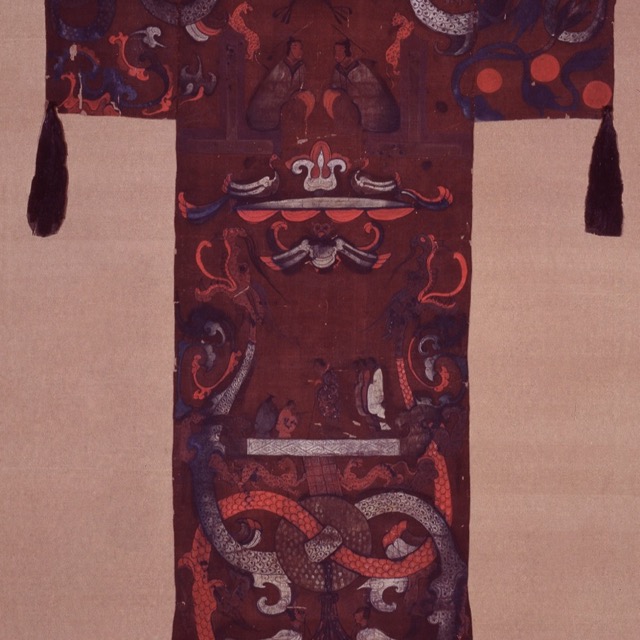
Perhaps the Han's most enduring legacy was philosophical: Confucianism was adopted as the official ideology of the state, and a civil service examination system based on Confucian texts began to take shape — the distant ancestor of the imperial exams that would select China's bureaucrats for the next two thousand years. Han tombs, like the spectacular one at Mawangdui that produced the silk banner shown here, also preserved an extraordinary record of Han-era art, medicine, and daily life, giving historians a uniquely detailed window into this period.
The Han dynasty's fall — and the chaotic Three Kingdoms period that followed — is one of the most adapted eras in Chinese costume drama and literature, inspiring everything from classic novels to modern historical epics centered on warlords vying to reunify the empire.
From golden age to cosmopolitan empire
See the full timeline, or jump ahead to the Tang dynasty.